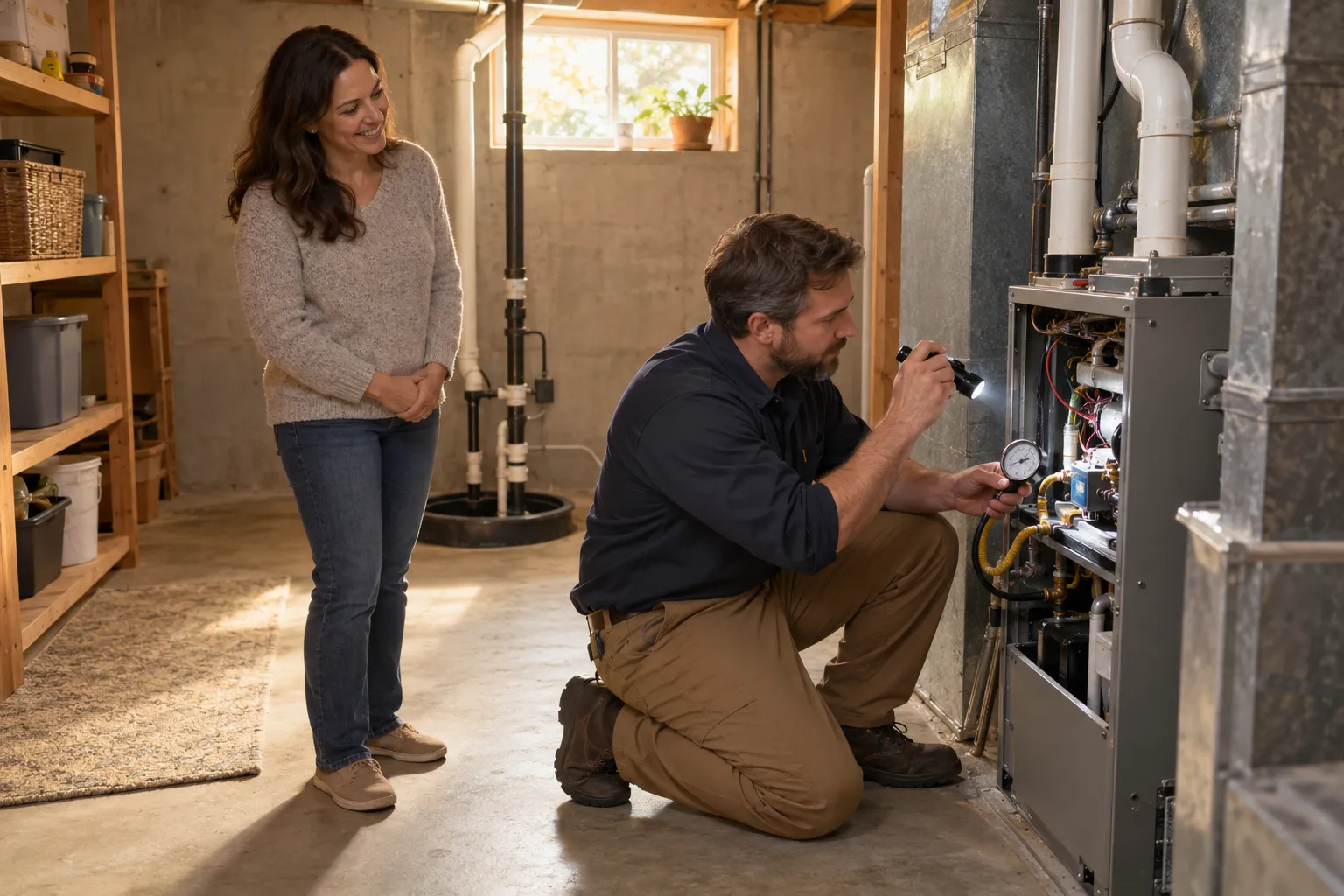
A furnace that will not heat is more than an annoyance when winter frost sets in. It can also be a safety issue. Defendingloaded Heating & Air is a referral service. We do not repair furnaces. We connect homeowners in St. Louis and the St. Louis area with independent local HVAC providers.
This page explains what to do first, what to check safely, and what a repair visit usually involves. It also covers typical costs and when replacement may make more sense. The provider does the work, and you decide what happens next. Ask for a quote in writing before any repair begins.
Smell Gas? Stop and Read This First
Gas safety comes before comfort. If you smell rotten eggs or hear a hiss near the furnace, act at once.
Do:
- Leave the house with everyone inside, including pets.
- Call your gas utility or emergency services from outside.
- Stay out until a professional says it is safe.
Do not:
- Flip light switches or use a lighter.
- Use a phone inside the home.
- Try to find the leak yourself.
Carbon Monoxide Warning Signs
Carbon monoxide has no smell. A faulty furnace can produce it. Headaches, dizziness, nausea, or an alarm sounding are warning signs.
If a CO alarm goes off, get everyone outside and call emergency services. Do not reset the alarm and go back to bed.
Safe Quick Checks Before You Call
A few simple checks may solve the problem. They may also give a provider useful details. Stay within what is safe for a homeowner.
Check the thermostat
Make sure it is set to heat. Set the temperature a few degrees above the room. Replace dead batteries if it uses them.
Check power and the breaker
Look at the furnace switch, which often looks like a light switch. Check the breaker panel too. If a breaker trips again after you reset it once, stop and leave it off.
Check the filter
A clogged filter can cause overheating and shutoffs. Swap in a clean one if yours is dirty.
Look at the vents and the basement
Make sure registers are open and nothing blocks them. In a basement, keep boxes and laundry away from the furnace. Check that water is not pooling near it, since spring flooding can reach equipment.
Signs Your Furnace Needs Repair
Some signs mean you should not wait for a convenient moment.
- No heat at all, or only cool air
- The furnace turns on and off in short bursts
- Banging, squealing, or grinding sounds
- A yellow or flickering burner flame, rather than steady blue
- Soot, a burning smell, or rising energy bills
Turn the furnace off if you see soot, smell burning, or notice a yellow flame. Then ask a provider to inspect it.
What Not to Do
Do not open the burner area or the gas valves. Do not bypass safety switches. Do not use an oven or a grill to heat your home. These shortcuts raise the risk of fire and carbon monoxide.
If pipes could freeze, use safe space heaters with an eye on them. Keep them away from curtains and bedding.
How Defendingloaded Heating & Air Routes Your Call
We want you to know exactly how this works. Defendingloaded Heating & Air is not a repair company. When you call, you are connected with an independent provider in our network. That provider handles the visit, the quote, and the repair.
Provider availability varies. Request a callback to check who can respond. Many providers can respond quickly when the need is urgent, but timing is up to each one.
What Happens During a Repair Visit
A typical visit follows a clear order.
Safety and diagnosis
The provider checks for gas or CO issues first. Then they test the thermostat, ignition, blower, and safety controls.
Explanation and quote
You should hear what failed and what the fix involves. Quote in writing before work starts.
The repair and a test
Once you agree, the provider makes the repair and runs the furnace to confirm it works.
Common Furnace Repairs
- Igniter or flame sensor replacement
- Blower motor or capacitor repair
- Thermostat replacement or wiring fixes
- Draft inducer or pressure switch repair
- Cracked heat exchanger evaluation
A cracked heat exchanger is serious. It can leak carbon monoxide, so a provider may advise shutting the furnace down.
Repair or Replace Your Furnace?
Age matters. Many furnaces last roughly 15 to 20 years. An older unit with frequent breakdowns may cost more to keep fixing.
Replacement may be worth a look when:
- The repair costs a large share of a new unit
- The heat exchanger is cracked
- Heating bills keep climbing
- Rooms heat unevenly
In older frame houses and ranch homes, ductwork may also need a look. Ask the provider to explain both options.
Questions to Ask the Provider
- Is the quote in writing, with parts and labor listed?
- What caused the failure?
- Is there a warranty on the parts and the labor?
- Will you check for carbon monoxide?
- Is a repair or replacement the better fit for my furnace?
A good provider answers plainly and does not rush you.
Prevent the Next Breakdown
Change the filter on schedule. Book a yearly tune-up before cold weather. Keep the area around the furnace clear. Test smoke and CO alarms each season.
Ready When You Are
Heating and cooling problems feel stressful. Take the safe first steps, then reach out. You are under no obligation to hire anyone.
What's Included
Safety Check
Providers look at gas, venting, and carbon monoxide risks first, before any repair work begins on your furnace.
Clear Diagnosis
The provider finds the cause and explains it in plain words before you agree.
Written Quote
Ask for parts and labor listed in writing before the provider starts any work.
Repair and Test
Once approved, the provider fixes the problem and runs the furnace to confirm it heats properly.
Typical Furnace Repair Costs
Prices depend on the part, the furnace age, and how hard it is to reach. These are typical U.S. ranges only. Always get a written quote from the provider before work starts.
| Item | Typical range | Notes |
|---|---|---|
| Diagnostic visit | $75 – $200 | Often applied to the repair, but ask first |
| Igniter or flame sensor | $100 – $350 | Common cause of no-heat calls |
| Thermostat replacement | $100 – $400 | Smart models cost more |
| Blower motor repair | $300 – $900 | Varies by motor type |
| Draft inducer motor | $300 – $800 | Needed for safe venting |
| Control board | $300 – $850 | Depends on make and model |
How It Works
Handle Safety First
If you smell gas or a CO alarm sounds, leave the home and call emergency services.
Do Safe Quick Checks
Check the thermostat, breaker, filter, and vents, then note what you see.
Call for Help
Request a callback to check provider availability, or use the request form.
Review the Written Quote
Read the quote, ask questions, and approve the work only when you feel ready.
Why Call Defendingloaded Heating & Air
Honest Referral Model
Defendingloaded Heating & Air connects you with independent providers and does not do the repair work itself.
Safety First
Our guidance puts gas and carbon monoxide risks ahead of cost or comfort.
Clear Pricing
We explain what drives costs so a written quote makes sense.
No Obligation
Request an estimate, compare, and decide on your own schedule.
Other Services
Need furnace repair help in St. Louis?
Have an AC or furnace problem? Send a request or call, and we will route you to an independent provider in our network. No obligation.
No obligationFurnace Repair Help FAQ
Why is my furnace blowing cold air?
Common causes include a thermostat set to fan, a dirty filter, a failed igniter, or a tripped safety switch. Check the thermostat and filter, then ask a local provider to diagnose it.
Is it safe to keep running a furnace that makes strange noises?
Not always. Banging, grinding, or a burning smell can point to a serious fault. Turn it off and ask a provider to inspect it.
How much does furnace repair cost?
Many repairs fall between about $150 and $900, depending on the part and the job. Ask the provider for a written quote before any work begins.
Get in touch
Have an AC or furnace problem? Send a request or call, and we will route you to an independent provider in our network. No obligation.
No obligation