A year-round HVAC maintenance calendar for St. Louis homes
Why a calendar helps
Most heating and cooling failures start small. A clogged filter, a blocked drain or a dirty outdoor coil is easier to deal with than a dead system in a heat wave or a cold snap. Homes in the St. Louis area face a wide swing: cold winters with deep frost, hot humid summers, severe thunderstorms and hail, and spring flooding.
This calendar covers what a homeowner can safely do and when to bring in an independent provider. Defendingloaded Heating & Air is a referral site and does not do the work itself.
Spring: after the thaw
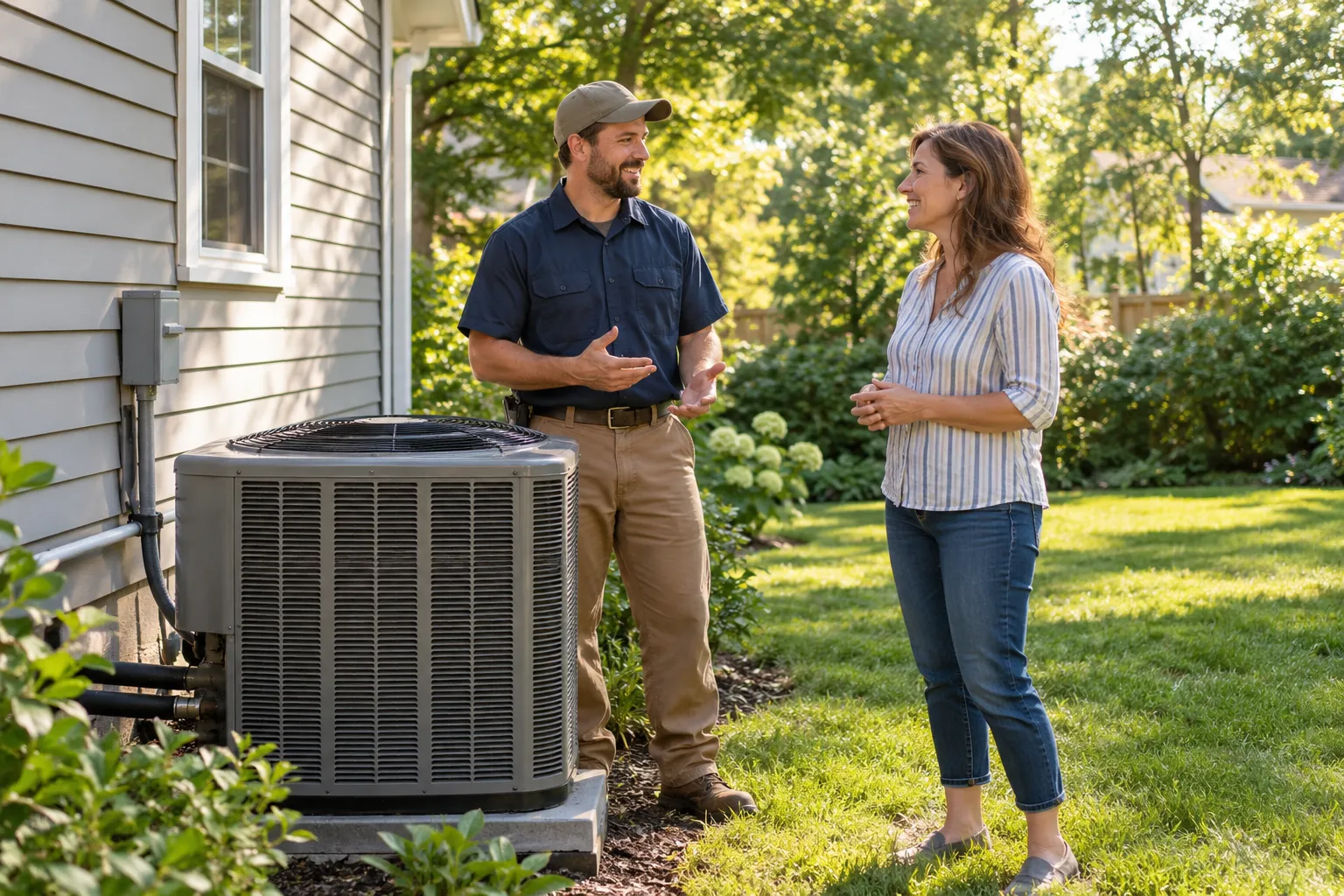
- Look at the outdoor AC unit. Remove leaves and debris by hand once the power is off at the disconnect.
- Check the fins for hail damage or bending from winter. Do not comb or press them hard.
- Replace the furnace and air handler filter if it is dirty.
- Check the area around a basement furnace and air handler for damp. Spring flooding and sump pump problems can wet equipment.
- Pour water into the condensate drain pan area only if the manufacturer instructions allow it. Otherwise ask a provider to check the drain.
- Consider booking an AC tune-up before the first hot week, when providers are busier.
Do not run the AC if the outdoor unit or a basement air handler has been underwater. Have a provider inspect it first. Do not stand in water to reach a panel or switch.
Summer: heat and humidity
- Check the filter monthly while the AC runs hard. Replace it when it looks gray and clogged.
- Keep plants, toys and stored items at least a couple of feet from the outdoor unit.
- Watch for signs of trouble: ice on the lines, water around the indoor unit, a unit that runs but does not cool, or odd smells.
- Keep supply and return vents uncovered, including in basements.
- Use a dehumidifier in the basement if it stays damp. Check that the sump pump discharge works.
Do turn the AC off and ask for help if you see ice or standing water at the indoor unit. Running it can make the damage worse.
Do not add refrigerant yourself. Handling it takes training, and low refrigerant means a leak.
Fall: get ready for heat
- Book a furnace check before the first cold week.
- Replace the filter.
- Clear storage and clutter from around the furnace. Keep anything that can burn well away from it.
- Test your carbon monoxide alarms and smoke alarms. Replace batteries and any alarm past its replacement date.
- Look at the flue pipe and the vent termination outside for nests, loose joints and rust.
- Cover or protect the outdoor AC unit only as the manufacturer advises. A solid cover can trap moisture.
- Cut back plants near outdoor vents and the unit.
Do not ignore a smell of gas, soot around the furnace, or a pilot or burner flame that looks yellow and unstable. Shut the furnace off and have it checked. For a gas smell, leave the house and contact your gas utility or emergency services from outside.
Winter: deep frost and snow
- Check the filter monthly.
- Keep snow and ice away from outdoor vents, including high-efficiency furnace intake and exhaust pipes. A blocked vent can shut the furnace down or force exhaust back into the house.
- Keep outdoor heat pump units clear of snow drifts and ice buildup.
- Set the thermostat to a steady temperature. Large swings in a cold house make the system work harder.
- Notice whether certain rooms stay cold. That can point to ducts that are leaking or poorly sized, which is common in older frame houses, bungalows and ranch homes.
- Know where the shutoff for your furnace and gas supply is.
Do keep a working carbon monoxide alarm on every level and near sleeping areas.
Do not use an oven or a portable fuel-burning heater to warm the house if the furnace fails.
After a storm or a flood
Severe thunderstorms and hail can damage outdoor units, and power surges can harm control boards. Spring flooding can reach basement equipment.
- Inspect the outdoor unit for dents, bent fins or debris from a distance. Do not touch it if water or wires are exposed.
- If water reached the furnace, the control board or the electrical panel, keep the system off. Do not turn it on to test it.
- Photograph the damage before anything is moved.
- Ask your insurer what applies to your policy. Do not assume a claim will be paid.
- Be careful with door-to-door offers after a storm. Check any provider's license and insurance before you agree to work.
Getting help
A yearly check on both the AC and the furnace is a common way to catch small problems early. Use the request form to describe what you need. Your request is routed to independent providers who serve your part of the St. Louis area, and availability depends on each one.
Related guides
A year-round HVAC maintenance calendar for St. Louis homes: questions
How often should I change my furnace filter?
Check it monthly while the system runs often, and replace it when it looks gray or clogged. Follow the size and type listed in your equipment manual. A blocked filter restricts airflow and can strain the blower, so do not run the system without one.
Can I clean the outdoor AC unit myself?
You can remove leaves and loose debris by hand after switching off power at the outdoor disconnect. Do not use a pressure washer or bend the fins. Do not open the cabinet. Electrical parts and refrigerant are work for a qualified provider.
What should I do if my basement floods?
Stay out of standing water and do not touch electrical equipment while it is wet. If it is safe, have the power turned off by a qualified person. Keep the furnace and AC off until a provider inspects them. Photograph the damage and contact your insurer.
Get in touch
Have an AC or furnace problem? Send a request or call, and we will route you to an independent provider in our network. No obligation.
No obligation